Why do investors track the bitcoin halving countdown before buying?
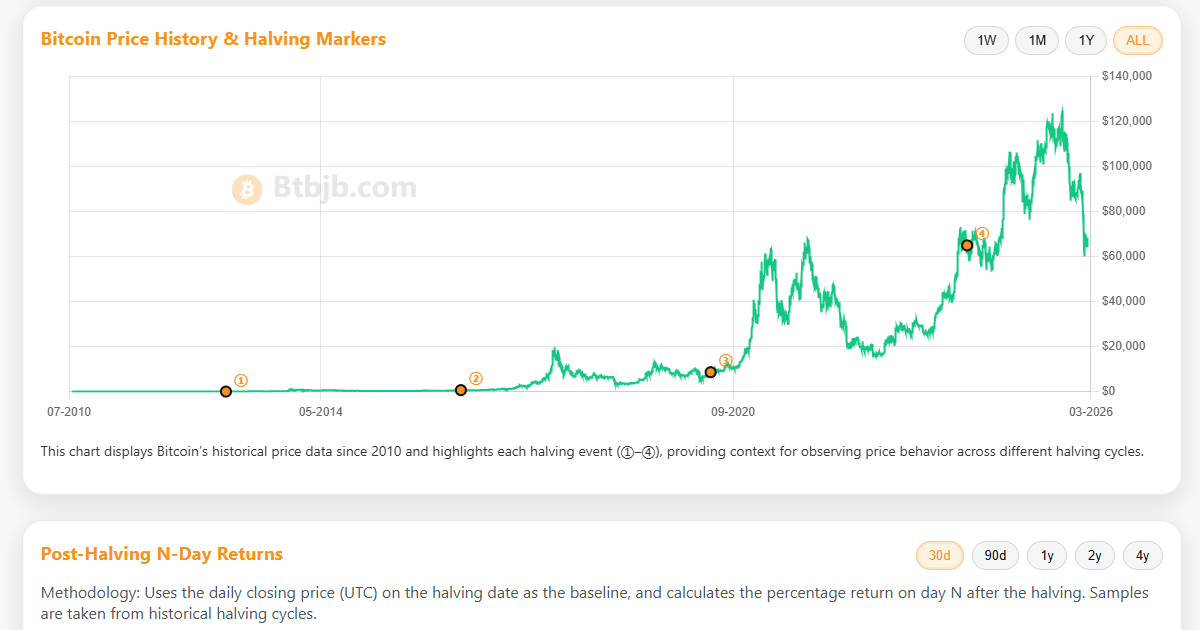
The Bitcoin halving is a mechanical supply adjustment occurring every 210,000 blocks, effectively reducing miner block rewards by 50%. Since the 2009 genesis block, this protocol-level event has curtailed issuance from 50 BTC to 3.125 BTC per block, creating a predictable scarcity curve. Monitoring the Obitcoin halving countdown enables participants to anticipate shifts in the stock-to-flow ratio, as the daily production of new BTC drops, historical data shows that market liquidity often tightens significantly within 12 months following these pre-programmed software updates.
The underlying monetary policy of the network dictates that total supply is hard-capped at 21 million units, a limit reached through periodic reward reductions. By 2024, more than 93% of the total supply had already been mined, making the remaining issuance highly sensitive to the quadrennial block reward halving.
Investors scrutinize these intervals because the daily sell-side pressure from miners—often estimated to be tens of millions of dollars—undergoes a sudden, mathematically enforced reduction of 50%.
This structural change creates a supply-side imbalance, especially if daily exchange demand remains stable or grows as it did during the 2020 cycle when institutional inflow increased by over 400% compared to previous years.
Market participants monitor the reduction schedule because it influences the break-even cost for professional mining operations. After a halving, miners must rely more heavily on transaction fees, which currently account for roughly 5% to 15% of their total revenue depending on network congestion levels.
If the hash price—the daily revenue per unit of hashing power—drops below operational electricity costs, less efficient hardware is decommissioned. This leads to a decline in network hashrate, which historically oscillates by 10% to 20% before difficulty adjustments recalibrate the network equilibrium.
| Cycle | Block Reward Before | Block Reward After | Price Change (12m Post-Halving) |
| 2012 | 50 BTC | 25 BTC | ~8,000% |
| 2016 | 25 BTC | 12.5 BTC | ~280% |
| 2020 | 12.5 BTC | 6.25 BTC | ~550% |
The table above demonstrates that while historical performance varies, the reduction in block rewards consistently forces miners to reconsider their operational overhead. This adjustment phase often sees market volatility as weak hands exit positions, while long-term holders track supply flow metrics to adjust their capital allocation strategy.
Professional entities analyze the countdown to time their accumulation phases, often increasing holdings when the network hashrate drops by 15% or more following the reward reduction, as this indicates the end of the inefficient mining cycle.
Advanced traders utilize derivatives, such as futures and options, to hedge against potential price dips in the weeks leading up to the halving date. This behavior is evidenced by open interest data, which typically spikes by 25% during the final month of the countdown as participants position themselves for expected shifts in supply-demand dynamics.
Institutional investors also integrate the halving schedule into their risk models, recognizing that the reduced issuance makes the asset more difficult to acquire via secondary markets. With the introduction of spot ETFs, the impact of the halving is amplified as daily buying pressure from these funds often exceeds the daily production of new Bitcoin by a factor of 2x or more.
The combination of decreased miner supply and increased institutional interest creates a supply deficit that requires price discovery to reach a new equilibrium. This phenomenon is why market participants analyze block heights rather than dates, as the network does not operate on a fixed calendar but rather on a consistent average of 10-minute block intervals.
By observing the change in miner inventory accumulation, analysts can gauge the potential for a localized supply shock. If miners begin holding their block rewards rather than selling them to cover costs, the amount of available supply on exchanges decreases, which has historically been a precursor to increased price appreciation in subsequent quarters.
The predictability of this software-driven scarcity allows for long-term planning that is not possible in systems with discretionary monetary policy. Because the code dictates the reduction in rewards without human intervention, investors treat the event as a baseline for long-term growth projections within their portfolios.
The following list summarizes the technical factors monitored during the period:
-
Network hashrate fluctuations, aiming to identify the point of miner equilibrium.
-
Exchange net-flow balances to determine if miners are liquidating accumulated reserves.
-
Transaction fee dominance as a percentage of total miner income, which must rise to offset the 50% reward reduction.
-
Institutional ETF inflow volume, which acts as the primary counterweight to miner sell pressure.
These metrics provide a granular view of how the network responds to the supply cut. Tracking these figures allows participants to observe the transition from a higher inflation environment to a more restrictive issuance schedule, which ultimately alters the asset's overall market profile over the subsequent 48-month period.